
Here are some of the most common questions we receive. We are also happy to answer any additional questions you might have. Just reach out using our Contact Form. Also, be sure to check the Helpful Links page.
What Are Miniature Bull Terriers Like?
Miniature Bull Terriers are intelligent, entertaining, affectionate, and full of personality. They are often described as clowns wrapped in a muscular body.
They thrive when included as part of the family and enjoy participating in everyday activities. While they can be independent thinkers, they are also deeply devoted to their people.Prospective owners should expect a dog that requires training, structure, exercise, and mental stimulation. A well-bred and well-socialized Miniature Bull Terrier can excel in Conformation, Performance Sports, Therapy work, hiking, and family life.
Most importantly, life with a Miniature Bull Terrier is rarely boring. Please read our article, Living With a Miniature Bull Terrier Puppy: What to Expect.
What Health Testing Do You Perform?
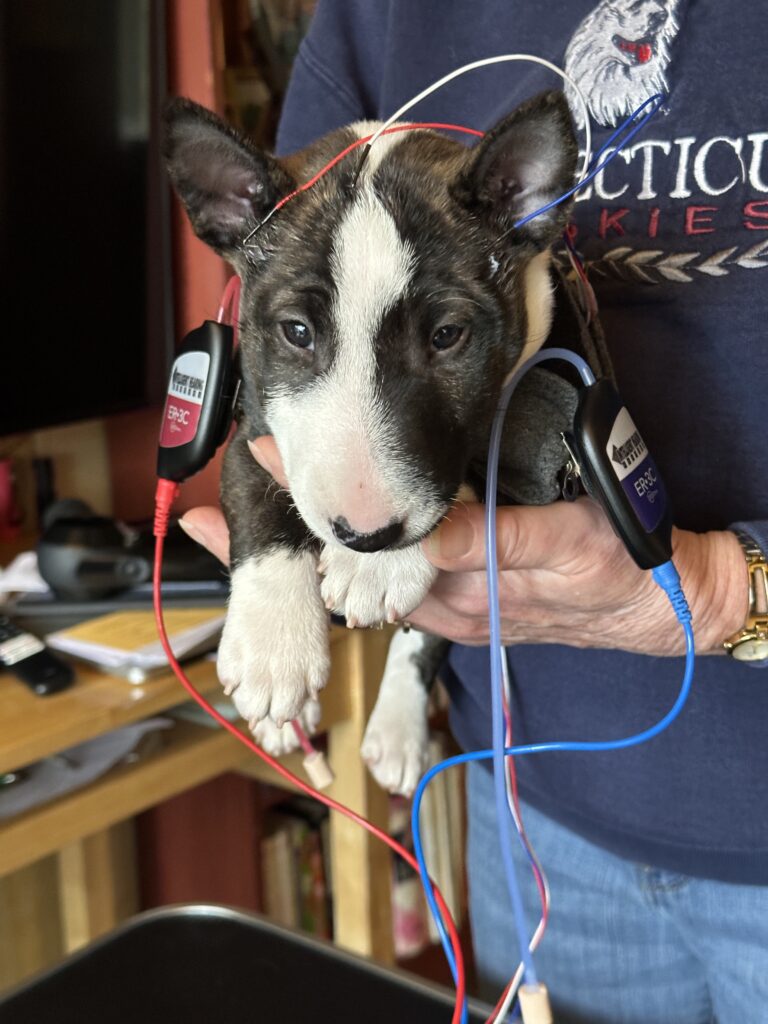
All breeding dogs at Legacy Mini Bull Terriers undergo the health testing and screening recommended by the Miniature Bull Terrier Club of America (MBTCA), our parent club, before being considered for breeding. This includes genetic DNA testing for Primary Lens Luxation (PLL), Lethal Acrodermatitis (LAD), and Laryngeal Paralysis (LP), as well as BAER hearing testing, kidney function tests, and screening of their patellas. At two years of age, our dogs go through a comprehensive cardiac examination, including Color Doppler Echocardiography.
Before going to their new homes, puppies receive the DNA testing listed above, BAER hearing testing, a preliminary cardiac evaluation, and a general health evaluation. Copies of health results are provided to puppy owners.
While no breeder can guarantee perfection, my goal is to use available health testing responsibly to make informed breeding decisions and produce the healthiest puppies possible.
Much more to read in our Health Testing Is Just the Beginning: Understanding Genetics in the Miniature Bull Terrier article.
Do You Offer a Health Guarantee?
Yes.
While no breeder can guarantee that a dog will never experience a health issue, I stand behind every puppy I breed. My contract provides detailed information regarding health guarantees, breeder, and owner responsibilities.
Most importantly, I am committed to supporting my puppy families for the life of the dog.
I will take back any Legacy puppy or dog, at any age and for any reason, because every dog I breed remains my responsibility for life.
How Do You Determine Which Puppy Goes to Which Home?
The process begins with a conversation. I want to learn about your household, experience with dogs, lifestyle, goals, and expectations. Sometimes a family will want a dog they can do agility with, so they want an active, keen personality. Others want a laid back couch potato.
After puppies are born and evaluated, I work closely with approved families to determine which puppy is the best match. Placement decisions are based on temperament, energy level, structure, and overall suitability.
My goal is not simply to place puppies—it’s to create lasting partnerships between dogs and their families.
At What Age Do Puppies Go Home?
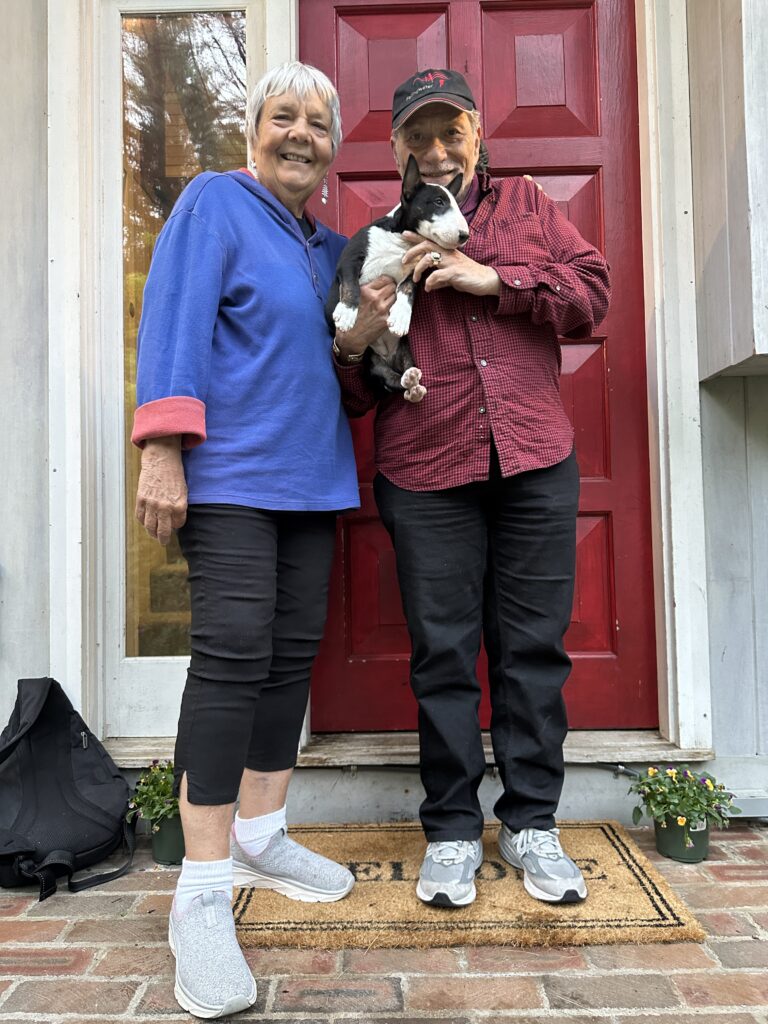
Most puppies go to their new homes at approximately 10 weeks of age.
This allows time for health testing, temperament evaluation, socialization, and important developmental experiences with their littermates and mother. Those additional weeks help build confidence and resilience that benefit puppies throughout their lives.
What Does Preservation Breeding Mean?
Preservation breeding is the responsible breeding of purebred dogs with the goal of protecting and improving the breed for future generations.
This involves careful pedigree research, health testing, temperament evaluation, and selecting breeding stock that exemplifies the Breed Standard. Preservation breeders are not simply producing puppies—they are serving as stewards of the breed.
Every breeding decision is made with the long-term health, temperament, structure, and future of the Miniature Bull Terrier in mind.
You can read more in our article, What Is a Preservation Breeder?
How Often Do You Have Litters?
I breed infrequently and only when I have a specific goal for my breeding program.
As a Preservation Breeder, I do not produce puppies on a schedule or to meet demand. Litters are planned carefully, often years in advance, with consideration given to health, temperament, pedigree, and the future of the breed.
Because litters are limited, prospective owners are encouraged to contact me well in advance. Please fill out our Puppy Inquiry form.
To give you an idea, I am very connected in the Bull Terrier and Mini world, and it took almost three years to find the right one: our Nora.
How Much Do Puppies Cost?
Puppy prices vary and are subject to change. I welcome this question and am happy to have a phone conversation! After all, Minis are expensive to produce, and you will be spending your hard-earned money, so it is a very reasonable topic.
The purchase price reflects far more than the puppy itself. It includes health and genetic testingof parents and puppies, veterinary care, temperament evaluation, socialization, registration, microchipping, breeder support, and the considerable time and resources invested in responsibly raising a litter. In addition, every puppy has our lifelong support, as do their owners.
Please contact me directly for current pricing and availability.
I am talking to a breeder that says their dogs have AKC papers. What does that mean?
“AKC papers” simply mean that a dog is registered with the American Kennel Club. Registration records a dog’s pedigree, but by itself it does not guarantee quality, health, temperament, or ethical breeding practices.
Unfortunately, many people assume that AKC registration is a seal of approval. It isn’t. The AKC does not inspect every breeding program or certify that every registered dog meets the breed standard or has been health tested.
It’s also important to understand that AKC registration is based on the information provided by breeders. If someone falsely represents a dog’s parentage and obtains AKC registration, those dogs—and potentially their future puppies—can also receive AKC registration. While intentional falsification violates AKC rules and can result in penalties if discovered, registration alone is not proof that a pedigree is accurate or that a breeder is reputable. And yes, people lie to get this accomplished.
When evaluating a breeder, look beyond the registration papers. Ask questions such as:
- Have the parents completed all recommended Miniature Bull Terrier Club of America health testing for the breed? And ask to see the results.
- Can they explain why they chose this particular breeding?
- Do they prioritize temperament as well as health and structure?
- Are they knowledgeable about the breed’s history and committed to preserving it?
- Will they provide lifetime support for the puppy they produce?
AKC registration is just one piece of the puzzle. A responsible Preservation Breeder uses registration as a record of pedigree—not as a substitute for health testing, genetic testing, ethical breeding practices, and a lifelong commitment to improving and protecting the breed.
How Do I Become a Member of the Miniature Bull Terrier Club of America (MBTCA)?
I strongly encourage Miniature Bull Terrier owners to join the Miniature Bull Terrier Club of America (MBTCA).
Membership provides access to educational resources, health information, club activities, breeder education, and opportunities to connect with fellow enthusiasts across the country.
Information about membership requirements and applications can be found on the MBTCA website. I am also happy to answer questions and assist prospective members through the process, whether you have a Legacy dog or not!
How Do I Get Into Dog Sports and Where Do I Start
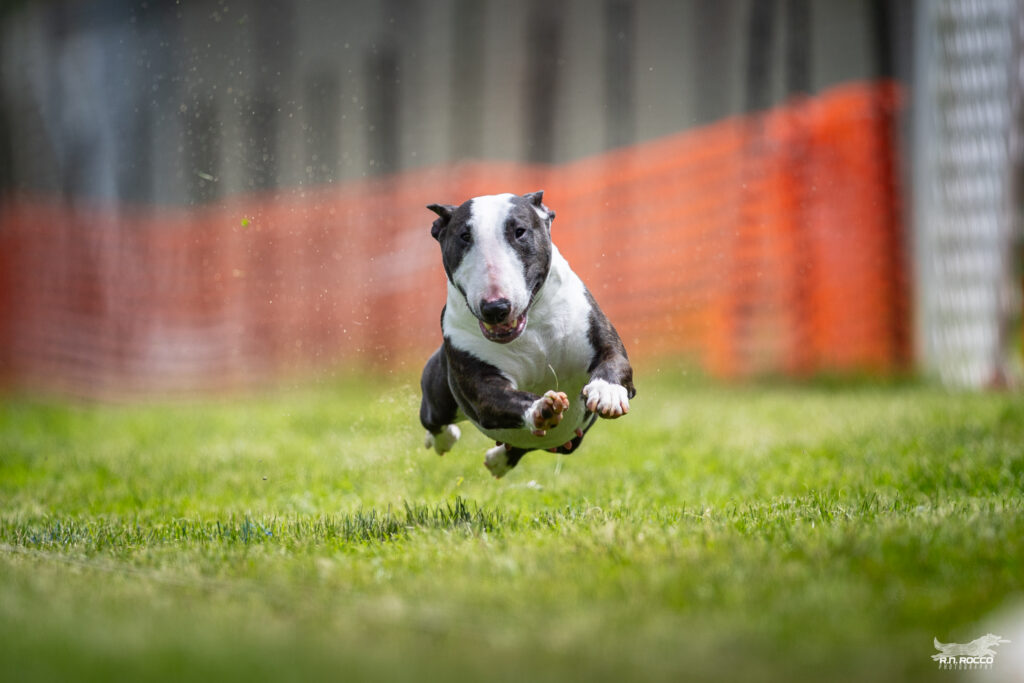
The best place to start is by finding an activity that both you and your dog enjoy.
Miniature Bull Terriers participate successfully in a wide variety of sports, including Conformation, Rally, Obedience, Fast CAT, Scent Work, Trick Dog, Therapy work, and more.
You do not need prior experience to get started. Local training clubs, AKC events, and experienced mentors can guide you. I am always happy to help puppy owners explore activities that fit their interests and their dog’s strengths.
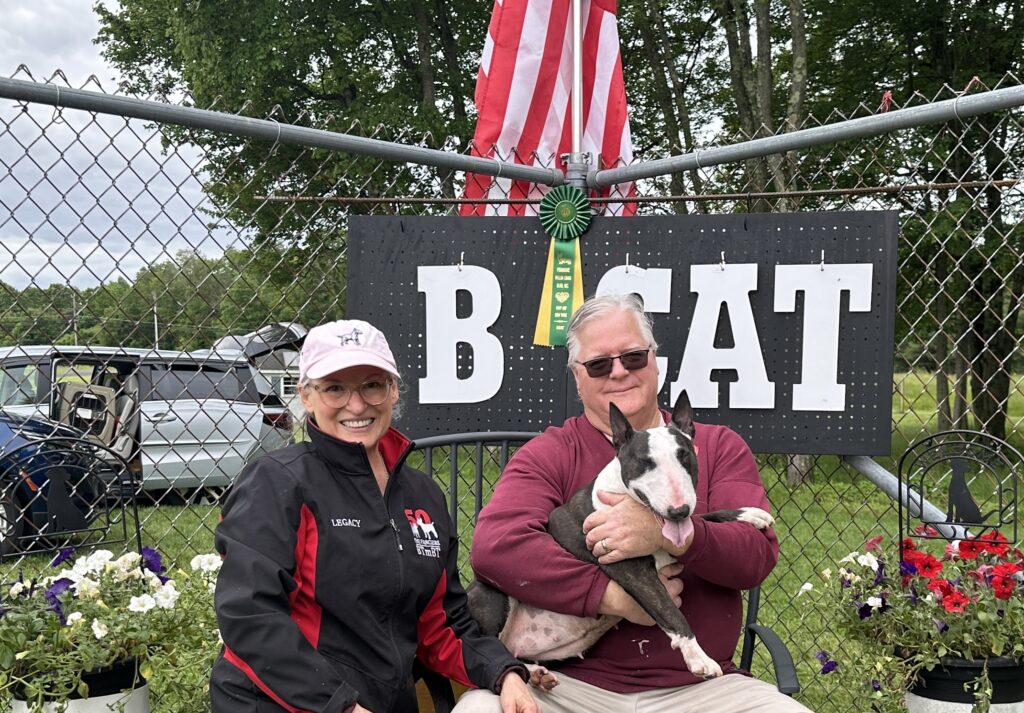
One of the greatest joys of dog ownership is discovering what your dog loves to do, and dog sports are a wonderful way to strengthen that bond.